Bethany Hoang
Urgent Prayer for Trafficking Rescue Operation
Right now it is night in South Asia, and another one of our teams is preparing for a rescue operation of sex trafficking victims. Here is what I’ve received from my colleagues in the field—please do be in fervent prayer. We appreciate your partnership with us in this way, so greatly:
“Tonight we will be raiding a large brothel complex. This is a dangerous raid, and we hope to retrieve 6-8 minors—the largest collection of minors in one brothel that we have seen since our operations in [this city] began. Please pray for safety for our team, as well as cooperation and teamwork with the local police with whom we are conducting this operation.”
Bethany Hoang
Update on Rescue Operation
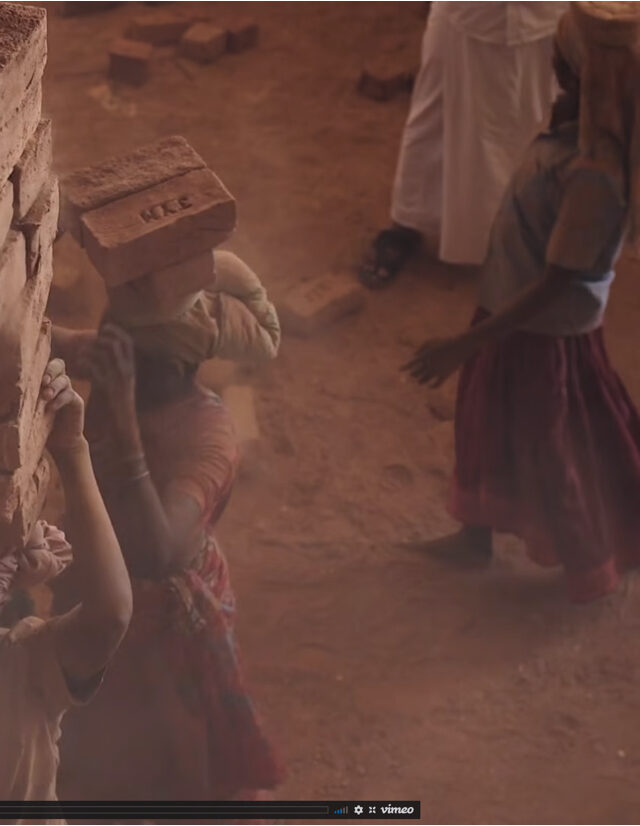
Please continue your prayers for our team in South Asia. Those enslaved in the brick kiln have been freed (praise God!), but our staff are still working around-the-clock to secure their release certificates from the government. Securing release certificates for each rescued slavery victim is absolutely critical for bringing sustainable rehabilitation as well as for bringing transformation to the overall system of slavery itself. Please do continue to pray - we are grateful.
08.27.08 at 1:25 PM |
(1)
Comments |
PERMALINK
Bethany Hoang
Urgent Prayer for Slave Rescue Operation
One of our South Asia teams is working on a critical rescue operation with the local authorities today. Here is the information I’ve received from the field - please keep this in your prayers throughout the day:
“We will be working with the local authorities today to infiltrate a brick kiln in which we’ve identified forced labourers. Please pray particularly for our staff lead for this particular operation, as this is his first time being at the helm. If all goes well with the operation, we will then need to secure release certificates from the government for each labourer. Please pray that we will have a good, effective working relationship with the government officials throughout this process.”
Bethany Hoang
Continuing the Conversation

What do you make of Andy’s claims? What unique cultural goods do you sense God prompting you to bring to the work of seeking justice for the oppressed? What risk might God be asking you to take?
A huge thank-you to Andy Crouch for taking the time to talk with us. Please do check out his blog and his new book, Culture Making. You will not be disappointed. But you may have some questions and thoughts of your own—if so, be sure to . We are always eager to .
For the full transcript of the interview, covering additional topics (such as, what role do those with seemingly no power/cultural capital have in creating culture?), join the Institute (read this to find out how) and we’ll send you the text.
08.25.08 at 10:15 AM |
(0)
Comments |
PERMALINK
Bethany Hoang
5 Minutes with Andy Crouch (Part 2)
Part 2 of my conversation with Andy Crouch last week. Here Andy addresses his claim that “we can’t change the world.” My question to him - where’s the hope in that? How do we then move forward to bring true transformation?
*****
BETHANY: Throughout all different sectors of society today we hear much talk about “changing the world.” What are we to make of this? How do you think we are to go about changing the world?
ANDY: Whenever you make culture, if by the grace of God you’re successful, it leads to transformation and change in the world. That being said, I think that we get carried away sometimes… There are hundreds of books with the subtitle: “How such-and-such changed the world.” But it’s much harder in the midst of history or culture [as opposed to looking in retrospect] to be at all sure that what you do is going to have a transformative effect. If you’re in it, if you’re in the cultural project, to strategically bring a change, and that’s your goal, I think you run the risk basically of pride and of overreaching, of trying to strategize your way into enough cultural power to achieve your goal. The problem is that no one [person] has enough cultural power to achieve the kind of change they want to happen in the world, and so we can easily burn out on ‘changing the world.’
Now does this mean that we’re not supposed to get right into the middle of the broken places in culture and try to bring change? No, it just means I think we should let go of this ‘world’ language. Or even changing “the” culture. I think its above, well, not to quote Obama from this past weekend, but its above our pay grade. That’s beyond our capacity, to change the world. Its a kind of hyperbolic rhetoric that obscures what we’re trying to do, which is to be present in local cultural situations and to see opportunities to create something in those places. If we pay too much attention to the ‘world,’ (similar to the problem of the bumper sticker, “I love humanity; it’s people I can’t stand") we’re probably going to miss the most important opportunities God has given us, which tend to be very specific.
BETHANY: If this is true, that we can’t “change” the world,” then how do you avoid creating a mass of previously eager activists resigning in deflated hope? How do you keep issues from feeling so complicated that people end up doing nothing at all? Or to be more specific, when someone sincerely expresses “I want to see slavery end in my lifetime,” what guidance would you give?
ANDY: It’s tricky. I don’t want to discourage that, but I would say a couple things. First, it is absolutely right to pray to the Lord of history that slavery be ended, because that is God’s will. We should be praying for Him to work in such a way that slavery is ended and all injustice is ended. That being said, I really think the most effective thing to do is probably not going to be a global abolition campaign. And here’s why: The causes and channels and conduits of what we label slavery are so different in different cultures that is very difficult to address that problem on that global level. And, not only are the causes of slavery diverse in different areas, also the remedies will also look different.
It’s a little too easy or it’s just misleading to say let’s end it in “the world,” because we’re really going to have to think about, “What does slavery look like in India? And maybe when we look in South India it’ll be different from North India. And then its going to look really different again in Sudan, and that’s going to look very different from slavery that’s happening in Atlanta, and in New Jersey. So we’re going to have to pick a specific place in which to become culturally-fluent, to try to understand the causes of injustice and what creative intervention might lead to change. That’s why IJM’s model is so good—It involves mobilizing people who are culturally-adept, in the different countries where [IJM] works, because the legal systems are so different.
I always would try to push people to think locally and think about a specific place. And frankly we’re going to find that at the end of the day it still feels like it’s too big for us in some way! And I actually think that’s really good—it means we’re not just people imposing our vision on the world. We really are people who are really in the midst of suffering, asking for God to work. And we’re putting all of our energies that we can into being part of His work. Even just thinking about one little district of one country—even then, you’re going to realize “This is too big, God we need you here.” And that’s exactly how Christians need to be.
...The language of changing the world is not nearly as helpful as asking, “What cultural good are you called to create and who are you called to create it with?” Because that gets us to really specific questions that happen at the scale where we can actually participate.
Some of us may feel frustrated and think, “Well I don’t know. I don’t think there’s anything I can do to really make a difference.” But the truth us, if there’s one category of prayer that that I think God almost always answers, it’s “God, show me a risk that you want to me take for the sake of the Gospel.” I’m not aware of many people who have prayed that prayer, who have opened themselves up who haven’t had that answered in relatively short order. It’s a matter of saying, “God, what local [as in specific vs. global, not necessarily domestic] place do you have for me? What calling, career, or cultural skill do You want me to develop?” God has a good track record of answering those prayers.
Bethany Hoang
5 Minutes with Andy Crouch
This week I had an opportunity to chat with Andy Crouch, one of our Senior Fellows here at the Institute, about his new book Culture Making . Andy has been a wonderful source of wisdom, ideas, and inspiration to IJM. He has traveled to experience our field work in Africa and India and frequently uses his wide-reaching influence as a writer and speaker to encourage others toward seeking justice for the oppressed. He also blesses us with his gifts in spiritual leadership at our Global Prayer Gatherings that happen each spring. His official bio can be found here in the Senior Fellows section of our website. For more information and archives of all his writings, be sure to check-out Andy’s website at www.culture-making.com.
I am going to post a few highlights from our conversation. Due to length, I will separate the highlights over several posts. The full transcript will be available in our upcoming Resource Reservoir—or, if you to join the Institute, I will send you a copy on Monday.
*****
BETHANY: Andy, thanks so much for taking the time to answer a few questions about your book. To begin, what led you to write this book in the first place?
ANDY: Well, I had been doing a lot of thinking and writing and speaking, specifically about consumer culture and the way that our culture lulls us into what I’ve come to call a “posture of consumption.” We expect fulfillment in life out of what we purchase. This [critique] really came about as I would look around me at Christians in our culture—not to mention people who aren’t followers of Christ—and, increasingly I felt that, while the Church was shaping certain aspects of [Christians’] hopes, dreams, fears, and goals, consumerism was doing a much more effective job of conveying a whole picture of how our lives should look… where we derive meaning… where we should find meaning… what is important for us to devote our lives to.
More and more, though, I felt like we should have something to replace this culture of consumption. Any kind of fully developed cultural system is like a lifeboat. It carries you through the rough waters of this beautiful, terrible world that we live in and gives you a sense of meaning and direction and orientation and safety. To simply ask people to jump out of one boat without providing another vision of what our lives should be about, it was clear that was not going to cut it. I really think that the challenges we face as Christians just in our daily discipleship are so much a matter of these very fundamental structures, cultural structures that surround us, that define for us what I’ve come to call the ‘horizon of the possible.’ We can’t imagine anything outside of that world.
BETHANY: So, how do we go about replacing our culture of consumption?
ANDY: Well, I’ve started asking, what is it that we’re really meant to do on this planet—if consuming is not the main thing, what is the main thing?
Really, the antidote for consumption is not just more well-informed critiques of a culture of consumption, but to actually embrace creativity as a fundamental part of who we are. And so that’s how I came to write the book. Only a book that is ultimately about creativity and that taps into this fundamental purpose that God has for us—only that vision could be strong enough to counter the gentle rocking motion of the consumer machine that puts us to sleep to our deepest human capacities.
*****
Up next: What does replacing a culture of consumption have to do with pursuing justice for the oppressed? And why does Andy claim that “we can’t change the world”? If this is true, then where is our source of hope? How do we actually live lives that bring transformation?
Please feel free to offer any initial thoughts in the “comments” section.
08.22.08 at 10:02 AM |
(0)
Comments |
PERMALINK
Bethany Hoang
Urgent Prayer for 5 Young Girls
At this moment in Southeast Asia (precise location being witheld for security) our investigators are working with the police to rescue five girls from forced prostitution in a brothel.
Upon locating these five girls, it has been determined that one is as young as 8 years old, and possibly younger.
Our team has presented the evidence to the local police, but to this point, the police have not acted as quickly as we would like for them to act.
Please pray for these five young girls as they are held in the brothel. It is the middle of the night in SE Asia right now.
Please pray for the police to be compelled by the evidence and to act swiftly.
Please pray for our team on the ground, that God would give them renewed energy and perseverance throughout the night and the days ahead.
08.20.08 at 1:05 PM |
(2)
Comments |
PERMALINK
Bethany Hoang
Today in Zambia

ZambiaMap
President of Zambia, Dr Levy Mwanawasa, died in a Paris hospital yesterday after suffering a sever stroke about seven weeks ago. Today I received this note from the director of our office in Zambia, where our work centers on protecting widows and orphans, particularly against violent injustice related to the AIDS pandemic:
“The country is having a week long time of national mourning. People have remained calm and there are no reports of any disturbance or violence in the country. We ask for your prayers for the people of Zambia and for the first family. Please join us as we pray for peace and unity in our country during this difficult time.”
Please do be in prayer for this country to remain at peace as the leadership transitions.
To learn more about late President Mwanawasa and the political situation in Zambia, please read this article from IRIN and this article from the AFP.
Bethany Hoang
5 Minutes With…
One of the regular features here on the IJM Institute blog will be an interview series that we are calling “5 Minutes With...” This series will offer highlights from interviews that we conduct with a wide variety of leaders who are impacting the way the global Church understands and responds to injustice in our world today. (The “5 minute” version will be posted here on the blog and the full text of each interview will be available in the forthcoming Institute Resource Reservoir.)
This afternoon I’ll be spending some time talking with Andy Crouch about his new book Culture Making. This book just released in July and is truly remarkable. I am excited to have this opportunity to talk with Andy and to share our conversation with you later this week (be sure to check back).
[Andy Crouch is a Senior Fellow of the IJM Institute and serves as editorial director for Christianity Today’s Christian Vision Project. He has also produced several documentary films. For more information see his bio on the Institute’s “About” page.]
08.19.08 at 9:37 AM |
(0)
Comments |
PERMALINK
Laurel Henshaw
The Institute Responds to Gary Haugen & Chuck Colson
The Willow Creek Leadership Summit requested that Bethany Hoang, Director of the IJM Institute, serve as guest leadership blogger on their Summit Next Steps website.
To read her response to Gary Haugen and Chuck Colson’s Summit sessions, along with the response of other guest bloggers such as Lynne Hybels, just click here and here and scroll down.
Were you able to attend any part of the Summit? Have you been reading others’ responses to the various sessions? What are your own thoughts?
08.18.08 at 1:40 PM |
(1)
Comments |
PERMALINK
Laurel Henshaw
Is Mercy Enough?
The latest issue of Rev! magazine features an article by our National Director of Church Mobilization, Jim Martin. Through sharing his own experience from The River Church Community in San Jose, California, Jim offers great encouragement and practical next steps for leading others beyond mercy ministry and into the work of also seeking justice for our neighbors who are suffering abuse and oppression today.
Here’s a short excerpt - for the full article, go to www.rev.org and click on “Why Mercy Isn’t Enough” under Extras.
Thankfully, despite the challenge and the cost, many church leaders over the last 50 years have chosen to open their eyes to God’s concern for the poor. And in engaging the issue, their churches have found not ruin, but restoration. They have discovered the secret that engaging in ministries of mercy provides not just hope for the poor and vulnerable, but also hope for their own tired congregations...The challenging truth, however, is that in a world so ravaged by evil as ours, mercy ministry is simply not enough.
...In the midst of these mercy ministries, we experienced the presence and power of God in very profound ways… Our isolation from the depths of evil and suffering in our world left us unequipped to answer the very persistent and difficult questions of oppression and injustice we encountered: Why were the people we were serving so vulnerable? Could anything be done to protect them before they were abused, or should we confine ourselves to binding up the wounds caused by the abuse? Treating the symptoms of oppression, while a mercy to those suffering, does not solve their problems. What the oppressed need is for justice to roll down like water. But is that the job of the church?
Bethany Hoang
Prayer Focus This Week
One of the rotating themes we will be featuring here at the IJM Institute is a weekly prayer focus. If you are already an IJM Prayer Partner you receive an email each Thursday detailing our requests for prayer related to each of our 16 Field Offices as well as our Headquarters here in DC. We so appreciate your partnership in prayer with us - it is truly the way that we are sustained in this work. We daily experience God answering your prayers for our clients, staff, and global justice ministry as a whole in ways beyond what we even hope for. If you are not yet a Prayer Partner with IJM, you can sign-up for this Institute program here on IJM’s home website.
This week, we deeply appreciate your prayers for our Justice Operations division as they complete what we call “Lawyer’s Week.” About 100 IJM attorneys and other field staff have gathered in one location this week for two purposes:
1) To sharpen their litigation (trial advocacy) skills by training with top litigators who have flown-in and are volunteering their time and expertise
2) To experience spiritual nourishment, refreshment, and growth -- individually and as a team, through disciplines of rest and reflection
Would you join me in praying for our brothers and sisters on the Justice Ops team as they close out their time together, travel home (to over a dozen different countries), and continue their dedication to rescuing and securing justice for the oppressed?
Laurel Henshaw
Q&A from the Leadership Summit (part 2)
Here are just a few more answers to some of the questions we received after Gary’s message at the Leadership Summit. Feel free to submit others as comments and we’ll be sure to respond over the next several days.
Q: How do you fight social injustice w/o law experience?
A: The work of bringing justice to the oppressed is critically advanced by lawyers who serve as legal advocates. However, at IJM this work is never done by lawyers alone. Bringing justice requires a team effort, and the players must come from nearly every imaginable profession: photographers, accountants, journalists, fund raisers, theologians, marketing professionals, teachers, social workers, administrators, investigators, pastors, and others. Even if one does not pursue a career in human rights advocacy, there are numerous ways to volunteer. By engaging in the conversation here as well as within your community, and through educating others about issues of injustice, you are participating in the work of justice.
Q: How do you know you’re driven by true ‘Bravery’ (complete reliance/trust in God) and not ‘Foolhardiness’ (reliance on self or something less than Bravery as just defined)?
Bravery involves our mind as well as our passion. For instance, we do a threat assessment on every case before moving forward to make sure we are fully aware of what we are up against. We are also careful to deploy people with the right training and expertise to be successful – those who go undercover have years of experience in this type of investigative work. We take risks, but they are calculated risks based on the best information available. We also make decisions in community. This avoids someone making a foolhardy decision because of a blind spot in his/her thinking.
Q: Since excellence is a huge value, how do untrained people in “the cul de sacs” actually do this dangerous mission without hurting (hindering, working against) the cause?
A: One of the ways that everyone can advance the work of justice is to identify injustice issues in areas where your church is already working. IJM has developed a DVD training called As You Go that equips short term mission teams to identify injustice issues while they are in the field – whether they are there to build homes, work with orphanages, or share the faith, etc. Once you identify injustice issues, it is important to share this with your church leadership so that a discussion can begin on what the church might do to pursue justice in these communities. In this process, IJM can serve as a consultant to equip the church to respond in a way that helps rather than hinders the situation. To learn more about this resource and to read stories about what several churches have done, visit http://www.ijm.org. The short term mission training is located in the store and the church stories can be found in the Get Involved – For Churches section.
Bethany Hoang
Q&A from the Leadership Summit (Part 1)
Friday we posted a sampling of the questions that have been flowing-in by text message and email to the Leadership Summit staff following Gary Haugen’s message. As promised, we’ll be rolling out answers to these questions over the next few days. To begin:
Q: Does Gary Haugen’s organization, IJM, have short term “field” opportunities – or is the level of specialization too high?
A: Yes, we have 6-12 month internships as well as post-graduate fellowships in each of our 14 field offices. The internships do not necessarily require specialized skill and can focus on a variety of areas. The post-graduate fellowships are for those who have acquired specialized skills and training, particularly in law or social work. To learn more, you can find extensive information on our Interns&Fellows page on the IJM website.
As for even shorter term opportunities, such as 1-2 weeks for small teams, please directly as these opportunities are explored on a case-by-case basis.
Q: When does a “pursuit of excellence” become workaholism and self-abuse? How do we know when we have allowed ourselves to sacrifice the wrong things (e.g. family) for what we believe is the work of God?
A: This is an important distinction. Although excellence does involve a commitment of time, excellence is often more about quality of investment than quantity of investment. Excellence involves choosing to reflect, to invite others to give honest feedback, to discuss the specific outcomes you desire ahead of time so you can track performance, and to debrief experiences to make sure all learning lessons are captured. At IJM, we believe in excellence in our personal lives as well as our work lives. This means that we give the best we have in the time available. For example, we have a limit on the nights that we travel away from home per month, knowing there will always be more opportunities than is healthy for one person to engage. If we are missing the joy in our personal lives it will eventually impact the ministry, and conversely, we make a commitment to our staff that the organization will not succeed at the expense of one’s family or personal life.
08.12.08 at 10:48 AM |
(1)
Comments |
PERMALINK
Bethany Hoang
Institute Travels and Trainings
The Institute staff along with members of the Church Mobilization team just landed on a red-eye from Seattle. Immediately following the Willow Creek Leadership Summit we hopped a plane to Portland for a packed 24 hours during which we trained Justice Advocates before driving up to Seattle for another packed 24 hours focused on training Justice Advocates.
What, or rather, who, are Justice Advocates?
Justice Advocates are volunteers with IJM who have been trained annually to speak on our behalf and to build relationships with churches and universities. Up until this point, the Justice Advocates program has existed exclusively in the Pacific Northwest as a pilot learning initiative. After four years, we are encouraged to be expanding this program into other regions of the country.
If you live in the Pacific Northwest and would like to meet up with a Justice Advocate, or if you are simply interested in learning more about this program in general, drop an email.
08.11.08 at 10:53 AM |
(3)
Comments |
PERMALINK